Gently harnessing the power of nature
How EM Works
1. Fermentation of Organic Matter
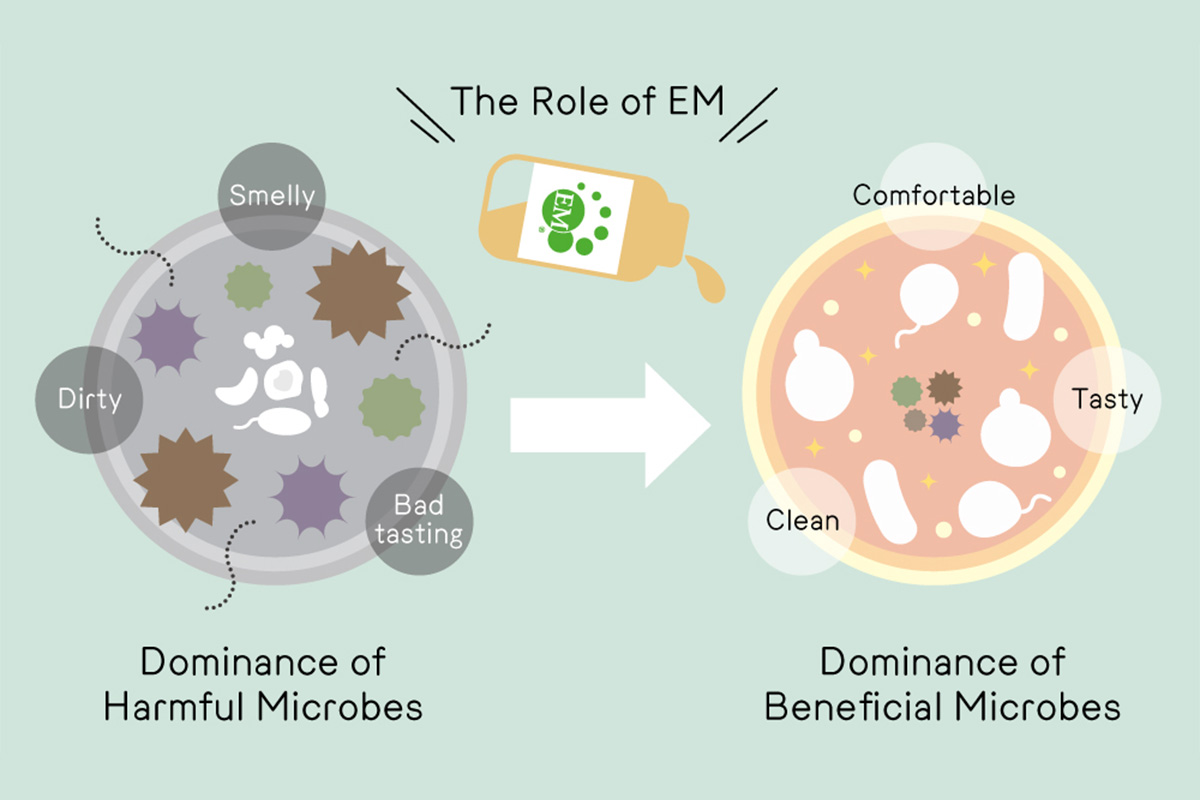
EM transforms organic materials such as food waste, animal manure, and fallen leaves through fermentation, preventing foul odors and harmful byproducts, while producing nutrient-rich matter that enhances soil health.
2. Activation of Beneficial Microorganisms
During fermentation EM generates amino acids, enzymes, vitamin, and organic acids, These compounds stimulate microbes already living soil and water, creating a healthier microbial balance.
3. Restoring Environmental Balance
By suppressing harmful bacteria and odor-causing organisms, EM helps restore balance to ecosystems, leading to fertile soil, cleaner water, and healthier conditions for plants, animals, and people.
1. Fermentation of Organic Matter
EM transforms organic materials such as food waste, animal manure, and fallen leaves through fermentation, preventing foul odors and harmful byproducts, while producing nutrient-rich matter that enhances soil health.
2. Activation of Beneficial Microorganisms
During fermentation EM generates amino acids, enzymes, vitamin, and organic acids, These compounds stimulate microbes already living soil and water, creating a healthier microbial balance.
3. Restoring Environmental Balance
By suppressing harmful bacteria and odor-causing organisms, EM helps restore balance to ecosystems, leading to fertile soil, cleaner water, and healthier conditions for plants, animals, and people.
High Versatility
The Expanding Potential of EM: From Agriculture and Aquaculture to Environment and Wellness
More than 40 years have passed since EM was first developed. What began as a solution for agricultural use has now evolved into a technology applied across a wide range of fields.
In agriculture, EM activates soil microorganisms and enhances biodiversity, creating healthy, living soil that supports strong and pest-resistant crops.
In livestock farming, it helps maintain odor-free barns, improves animal health, and contributes to higher meat quality. In aquaculture, EM enables antibiotic-free farming and supports sustainable water circulation systems. It is also used to restore river ecosystems, recycle food waste, and alleviate sick building syndrome in construction.
EM's benefits also extend to the field of wellness as well. EM based products, such as EM・X GOLD, help balance the gut environment and promote overall health and wellbeing.
More than 40 years have passed since EM was first developed. What began as a solution for agricultural use has now evolved into a technology applied across a wide range of fields.
In agriculture, EM activates soil microorganisms and enhances biodiversity, creating healthy, living soil that supports strong and pest-resistant crops.
In livestock farming, it helps maintain odor-free barns, improves animal health, and contributes to higher meat quality. In aquaculture, EM enables antibiotic-free farming and supports sustainable water circulation systems. It is also used to restore river ecosystems, recycle food waste, and alleviate sick building syndrome in construction.
EM's benefits also extend to the field of wellness as well. EM based products, such as EM・X GOLD, help balance the gut environment and promote overall health and wellbeing.

Worldwide
EM Around the World
EM is now produced in more than 50 countries and used in over 130, across climates ranging from the tropics to the Arctic. For more than 40 years, its benefits have been confirmed in agriculture, environmental restoration, and daily life.
In farms, households, fields and waterways, EM Technology contributes to healthier communities and a more sustainable planet.
EM is now produced in more than 50 countries and used in over 130, across climates ranging from the tropics to the Arctic. For more than 40 years, its benefits have been confirmed in agriculture, environmental restoration, and daily life.
In farms, households, fields and waterways, EM Technology contributes to healthier communities and a more sustainable planet.
EM is a trademark and a brand name owned by EM Research Organization,
and is used on a variety of products.