In the last issue I introduced the steady progress of the continuous cultivation from tomatoes to cucumbers, and how the yield was rapidly increasing (Photo 1). If things had continued like this, my hope was that the third-generation shoots would break limits even further, but unfortunately the rainy season began on May 20th, and the ridges were completely flooded until June 3rd, then the cucumbers and the Shungiku, edible chrysanthemums, planted along the edges, also withered. (Photo 2).
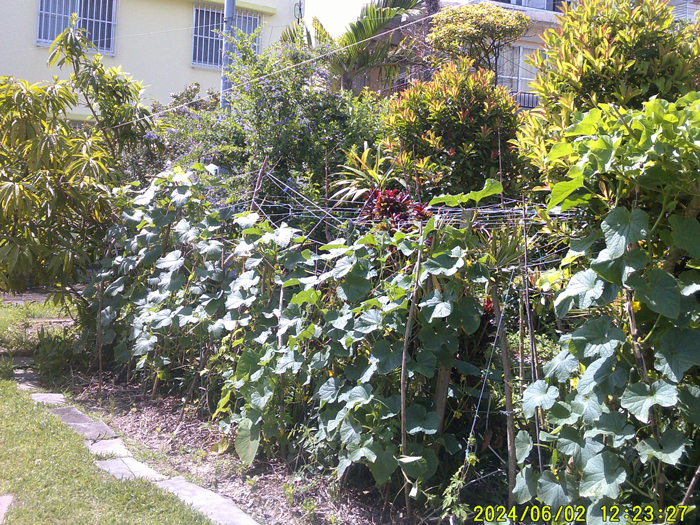
Photo 1
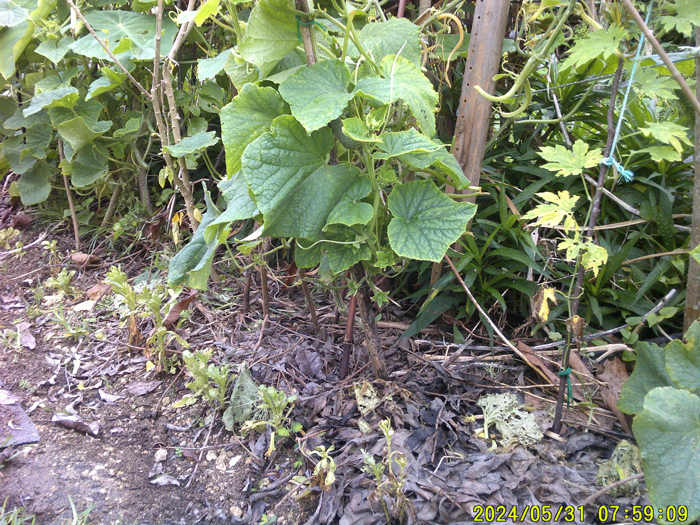
Photo 2
In my experience, if the rainy season continues like this, plants would frequently suffer root rot, standing wilt, and downy mildew and recovery would be almost impossible, yet by applying an additional 30 to 40g of EM Gravitron charcoal around the roots, the cucumbers are growing healthily. However, the fruits stopped growing due to blistering and split stems, resulting in a meager harvest. The female flowers that were blooming turned into green vegetative bodies one after another (Photo 3 and 4), and there was no new harvest. The rainy season let up for a few days, however, which allowed the plants to recover their vigor, and many third-generation shoots appeared (Photo 5).
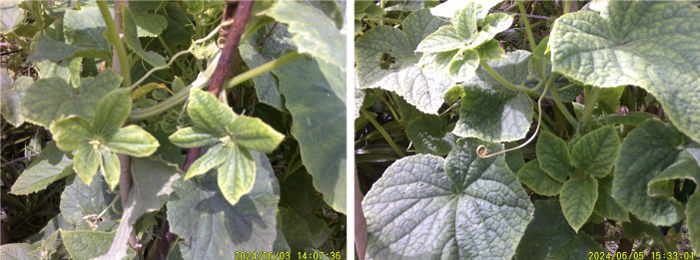
Photo 3,4
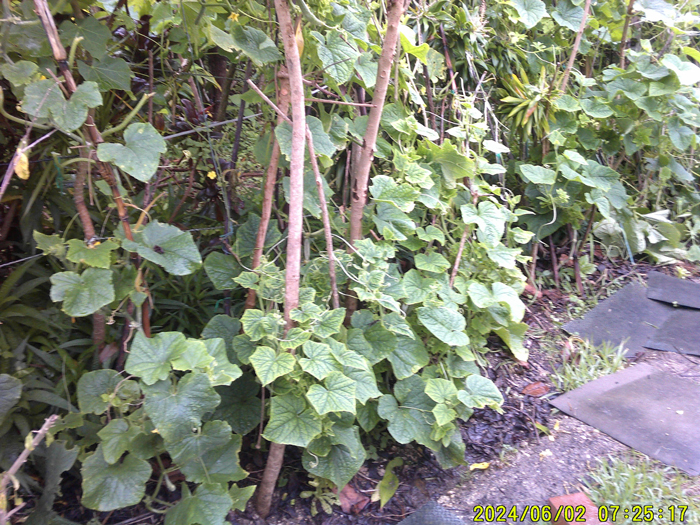
Photo 5
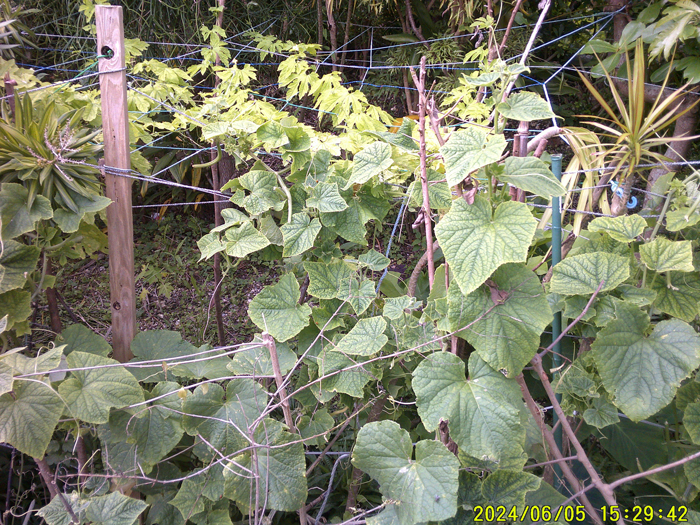
Photo 6: The bitter melons planted among the cucumbers are also growing well, spreading across the back shelf and beginning to bear a scattering of fruit
The results of this study show that the use of EM Gravitron charcoal and continued extensive use of EM kept any diseases from occurring, even in long-term waterlogged conditions in the open field, what you would expect to see in ideal hydroponic cultivation. By continuing this method, we will be able to produce soil that far surpasses terra preta, allowing for year after year of layered effective improvement. In short, if we continue to apply small amounts of EM Gravitron charcoal around the roots without tilling, we can create a versatile cultivation bed. Excessive rain during the rainy season can bring devastating damage to fruits and vegetables grown outdoors, but if we strengthen the barrier while bearing in mind the importance of drainage, and manage the entire field to achieve elevated hado levels, we can turn it into a force that not only helps the crops grow, but also improves the microflora deep within the soil and improve its physical and chemical properties.
Even a rainy season like this year’s is an opportunity for bananas to push the limits of how far they can improve. After the heavy rains from the typhoon at the end of August last year, I mixed 2 kg of EM Gravitron charcoal and 50 kg of salt per 10 ares and spread it over the entire orchard. Since then, once every three months I have been applying 25 kg of salt mixed with 1 kg of EM Gravitron charcoal. Due to the rains since April and the rainy season in May, the banana fields have become a big jungle, producing huge bananas, larger than any I’ve seen before (Photo 7 and 8).
The plants are about three times more densely planted than usual, but if salt and charcoal are used properly, we can expect to see a limit breakthrough that rewrites conventional wisdom (Photo 9).
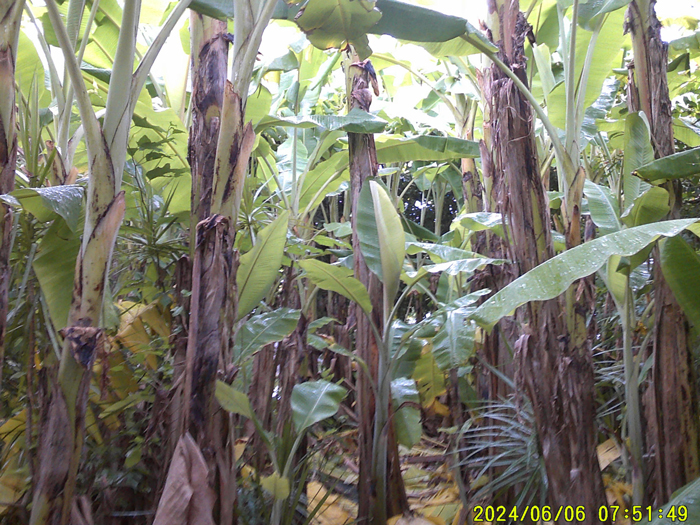
Photo 7
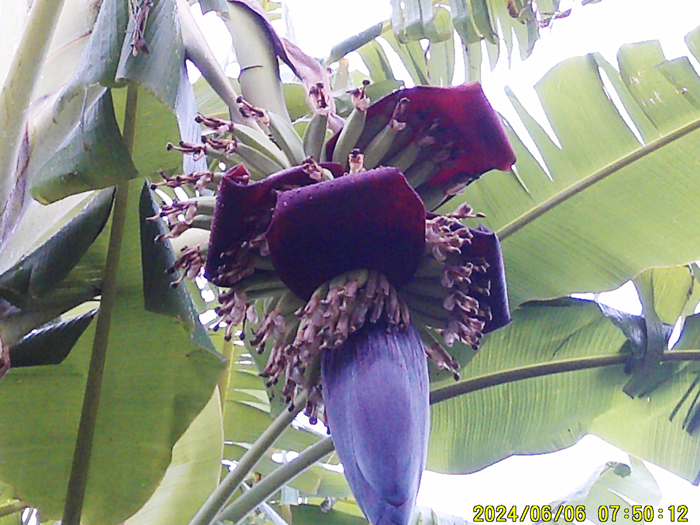
Photo 8
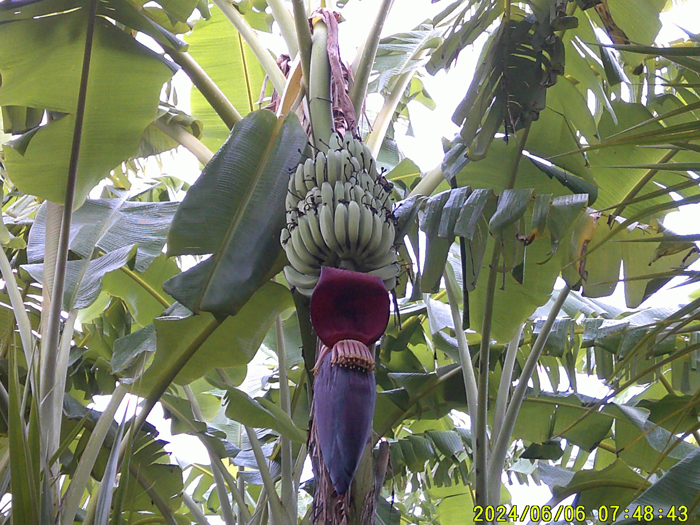
Photo 9
Iwate Compost’s pellet plant, which received a subsidy of 150 million yen out of the total operating cost of 347 million yen from the Ministry of Agriculture, Forestry and Fisheries (Tohoku Regional Agricultural Administration Office) as part of its comprehensive support project for the use of domestic fertilizer resources, began operation on May 21. (For details, see “Nibori Plant Operation On-Site Inspection Report”)
These pellets contain EM Gravitron charcoal and have the same fermentation power as EM Bokashi. Therefore, the product can be used wherever EM Bokashi is used, and can also be used as a Kekkai (barrier) material. Until now, large-scale farms have had difficulty making EM Bokashi, but fortunately these newly manufactured EM Compost Pellets are inexpensive and can be applied in multi-faceted ways. These pellets can reshape agriculture into a positive, sustainable cycle (such as permanent no-tillage) and are safe, easy to use, are low cost and produce high quality crops, and have the potential to transform agriculture along through EM quantum superposition effect (Photo 10 to 14).
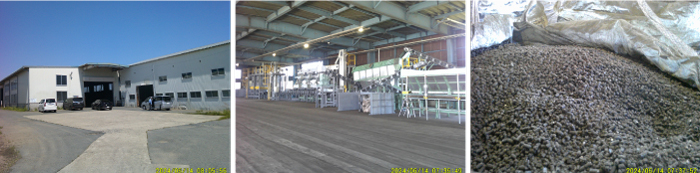
Photo 10,11,12
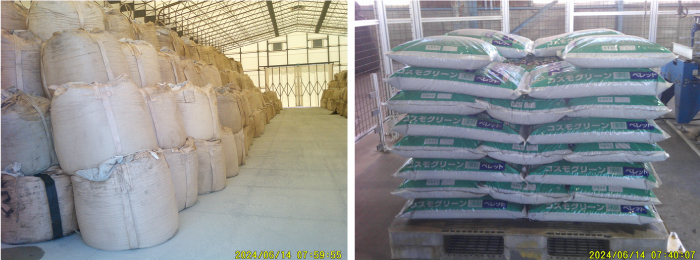
Photo 13,14
Read the original Japanese message at the link below.
2024.7.1 Updated.

EM Research Organization, Inc.|
All Rights Reserved. 2025 © EM Research Organization