Since the beginning of July the southern areas of Kyushu, such as Kumamoto and Kagoshima prefectures, have experienced extremely heavy rains; this was followed by serious damage not only to the entire Kyushu but a wide area in Japan. With the typhoon season approaching, I have a feeling of despair that no matter how hard humans try, we cannot win against nature.
When we see this kind of process, it would seem that no fundamental measures can be taken. However, damage can be minimized and shock waves reduced by applying the barriers using EM technology that I mentioned in the previous issue, and by rectifying the entire area on a daily basis.
The important thing is how this can be implemented publicly. There are already various advanced cases in Kumamoto prefecture.
There are previous cases in which EM was used for multiple purposes to deal with floods, earthquakes, tsunamis, etc., and extremely desirable results were achieved. Measures for evacuation shelters for natural disasters should utilize these. In response to the present disaster, we will actively support volunteers in the disaster area, mainly through U-net (United Networks for Earth Environment). Since EM technology is now widely accepted as an authentic technology, all the prefectures and municipalities should actively use EM.
In a postscript to last month’s essay, I discussed the EM Graviton rectifying effect that is taking place in Okinawa. After that, the rectifying level of the space in Okinawa further increased and when the EM SPACE MATE was set to 1, it was 3.4 times the previous measurement; it increased further and now has reached 3.9 times.
I would like to first introduce the condition of plants in Okinawa two to two and a half months after the rectification was strengthened on March 14th, in order to give concrete evidence of what is occurring. Photos 1 to 11 clearly show improvement in the deterioration caused by viruses. To exaggerate a bit, I think there are no virus-free plants in nature, and certain varieties deteriorate mainly due to viruses. When a plant that has been degraded by such a virus is subjected to tissue culture or growth point culture to make it virus-free, it exerts the desired ability as if it were a new variety, but over time the virus once again causes deterioration. In photos 12 and after, we see this phenomenon in the appearance of each plant.
Miraculous things are occurring, especially in the cultivation of sugarcane. The sugarcane in Okinawa used to have a yield of about 8 tons per 10a, but the ratooning has continued for many years, so the tillering power has declined, and the yield has dropped to 5.5 tons per 10a. If the result of this rectification makes it possible to obtain a large number of tillers as shown in Photos 17 and 18, reaching 10 tons per 10a is a realistic goal.
This regeneration is occurring not only on land but also in the sea. As seen in the June 19th edition of a local newspaper, Okinawa Times, there have been many reports about the remarkable recovery of coral in ocean around Okinawa.
The viewing period for this article has ended.
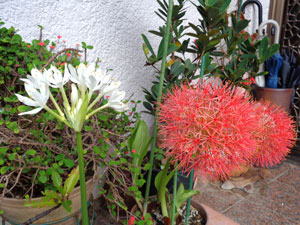
Photo 1: A giant Hosta that became virus-free, and a football lily
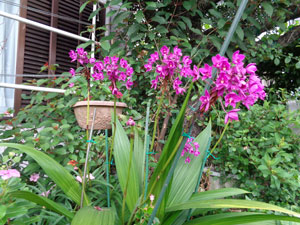
Photo 2: The virus-free purple Philippine ground orchid grew quite huge
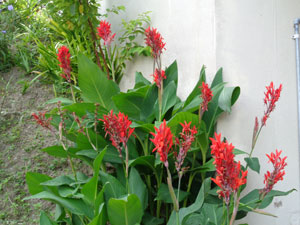
Photo 3: Wild Canna, virus-free and blooming beautifully
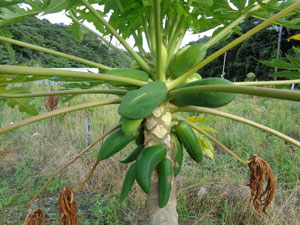
Photo 4: A papaya that is now virus free. The deformed fruits in the lower row were damaged by virus, and the fruits in the upper row have returned to normal.
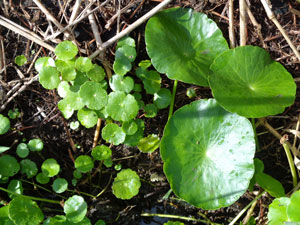
Photo 5: Virus free Hydrocotyle sibthorpioides that grew to give the illusion that it is almost tetraploid.
The ones on the left are normal size, while the ones on the right have grown to be enormous. (The ones on the left will also grow like the ones on the right.)
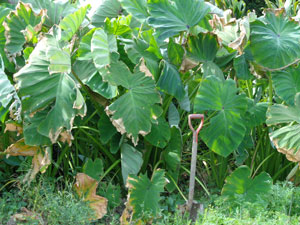
Photo 6: A taro that has become virus-free and has grown huge. (Note the height of the shovel)
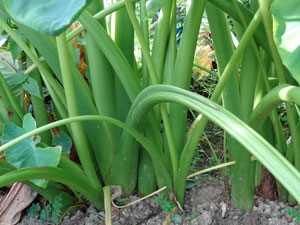
Photo 7: The root of a giant taro
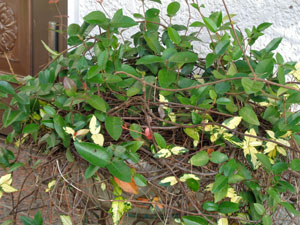
Photo 8: Mottled spots (yellow part) most likely caused by virus have started to disappear (no spots are found on top)
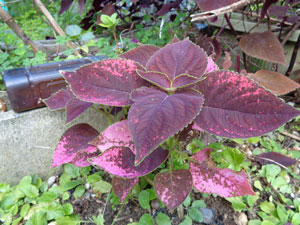
Photo 9: The bright spots on Coleus began to disappear and it grew huge
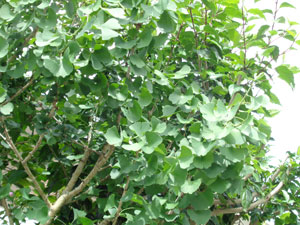
Photo 10: Ginkgo biloba in Okinawa, whose leaves have a tendency to shrink due to high temperatures, has normalized.
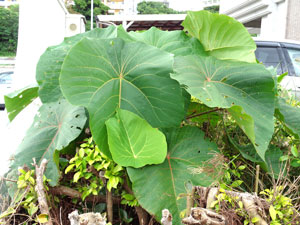
Photo 11-1: Virus-free, giant macaranga tanarius (One leaf on the opposite side below is normal size)
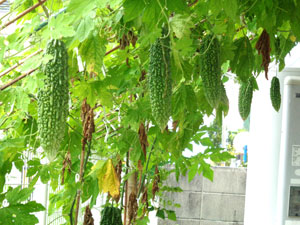
Photo 11-2: Abundant Bitter gourds growing in a home garden that became virus-free
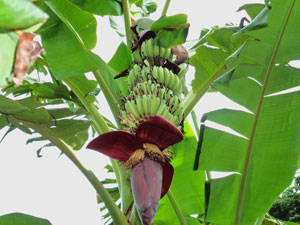
Photo 12-1: Bananas that grew 1.5 to 2 times larger than normal
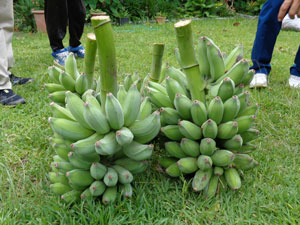
Photo 12-2: Giant island bananas
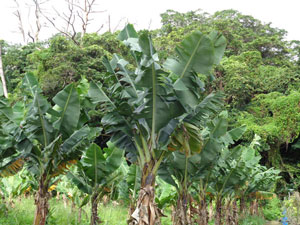
Photo 13: Dwarf banana trees, which usually spread their leaves downwards like palm trees, now have leaves growing upward.
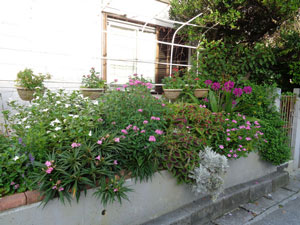
Photo 14-1: The flowers in our flowerbed that I have often introduced are growing huge
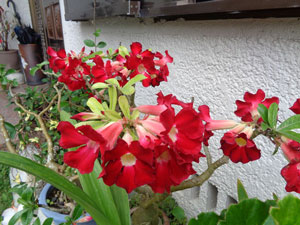
Photo 14-2: Adenium blooming as if it’s a different variety
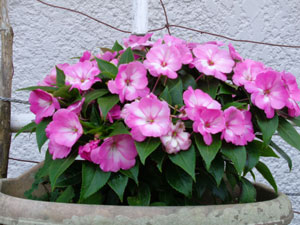
Photo 14-3: New Guinea impatiens blooming as if it’s a different variety
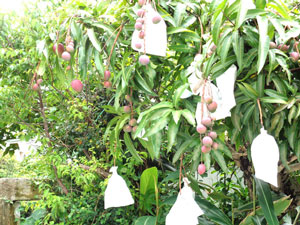
Photo 15-1: Fruited mangos grown without using a plastic green house
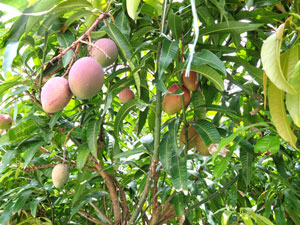
Photo 15-2: Fruited mangos without using a plastic green house
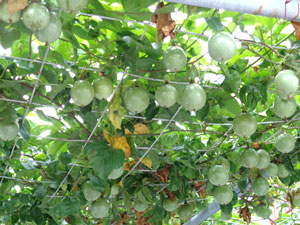
Photo 16: Virus-free passion fruit trees heavy with fruit
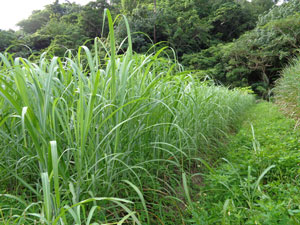
Photo 17: Spring-planted sugarcane, tillered like pasture grasses (usually the number of root stocks are less than half of these)
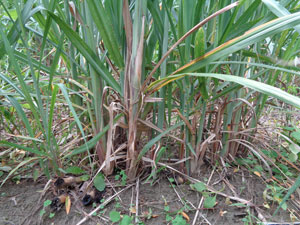
Photo 18: Sugarcane with a remarkable ratooning effect (usually there are 4-5 offshoots, but here there are 20 or more)
※This column describes the possibilities of EM technology from the standpoint of Professor Higa as an academic during this novel coronavirus pandemic.
Read the original Japanese message at the link below.
2020.7.17 Updated.

EM Research Organization, Inc.|
All Rights Reserved. 2025 © EM Research Organization