The EM project in Central and South America, carried out by EARTH University in Costa Rica and the EM Research Organization, Inc., operated from 1999 to 2014. For 15 years, they conducted collaborative research, and their results have steadily paved the way for the future of agriculture.
The driving force behind this evolution is the continued use of EM to create a beneficial fermentation-synthetic microflora in the soil.
This method is fundamentally different from conventional methods of using fertilizers to increase productivity and employs a technology whereby useful microorganisms functionally and cumulatively increase the productivity of the soil.
The goal is to enhance the versatility of microorganisms through microbial management techniques, without reliance on fertilizer, and through continued use of EM to make most of the earth’s soil significantly more fertile.
In other words, it is important for us to continue to manage our farmland in such a way as to constantly increase its microbial flora. The key is to spread organic matter such as harvest residue, cut grass, and rice bran over fields after the harvest is over, in order to create a system that increases the population density of EM and its function in improving the ecology.
If the technology for using EM for wastewater treatment, which is being used in Paraguay, is applied to post-harvest EM application, this will further enhance the future of agriculture, and I am truly anticipating great things to come.
Below are reports from overseas.
In Paraguay
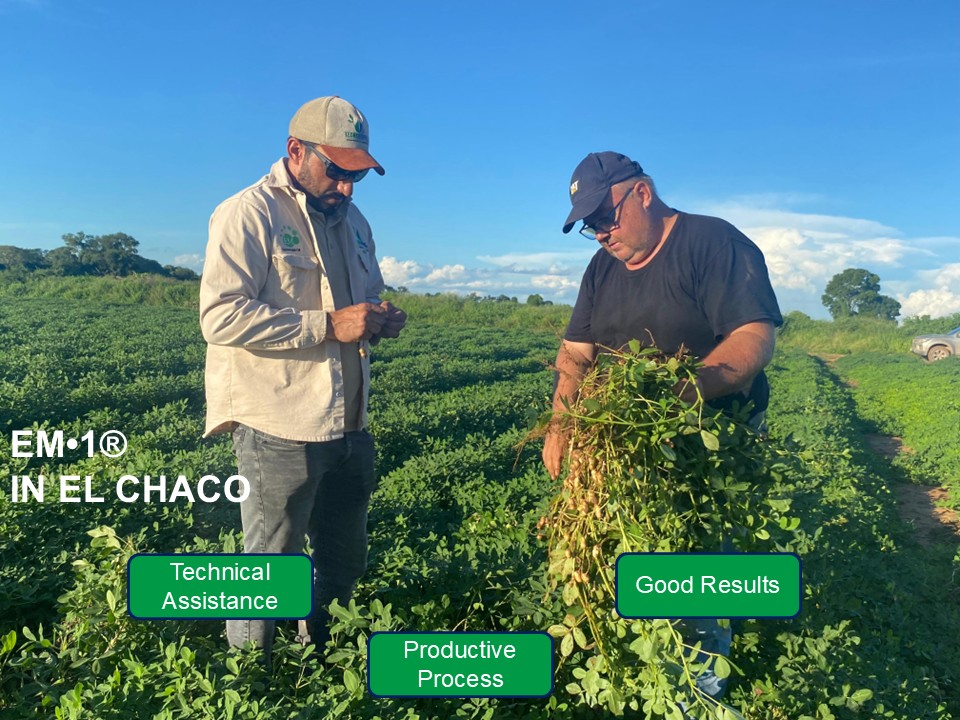
EM・1® in El Chaco Technical guidancea Efficient production
Good results
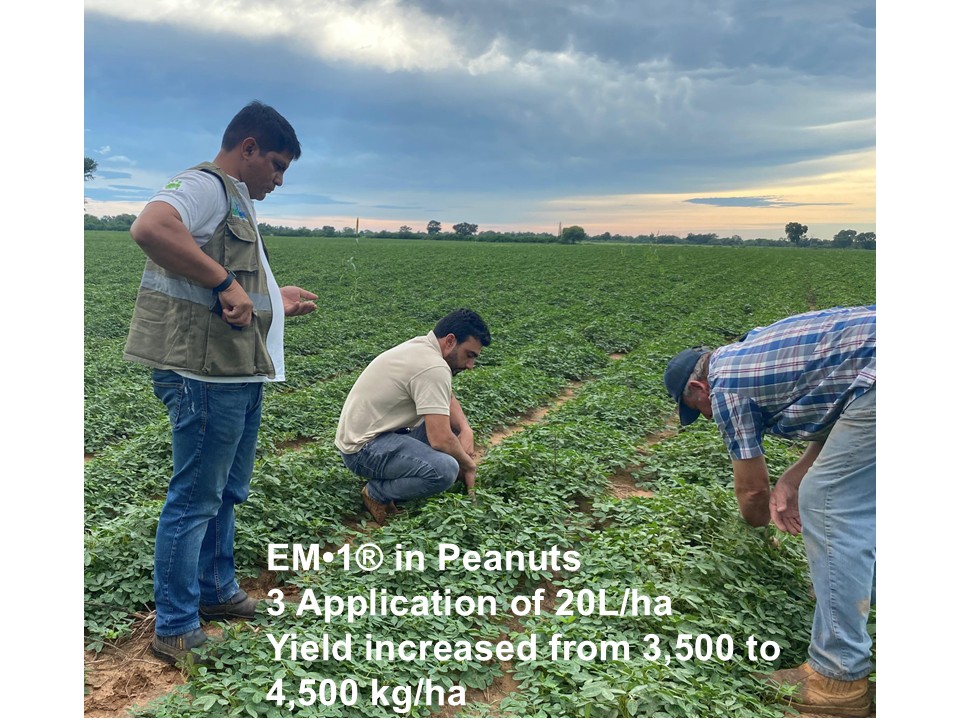
EM・1® was used for peanut cultivation 3 applications: 20L/ha
Yield: Increased from 3,500 kg/ha to 4,500 kg/ha
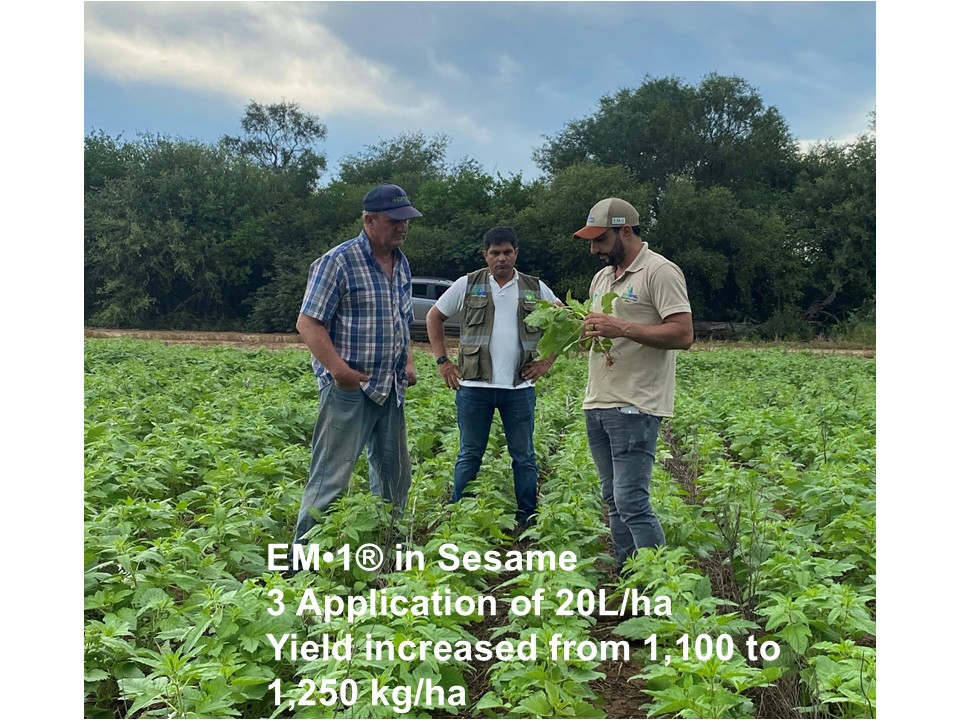
EM・1® was used for sesame cultivation 3 applications: 20L/ha
Yield: Increased from 1,100 kg/ha to 1,250 kg/ha
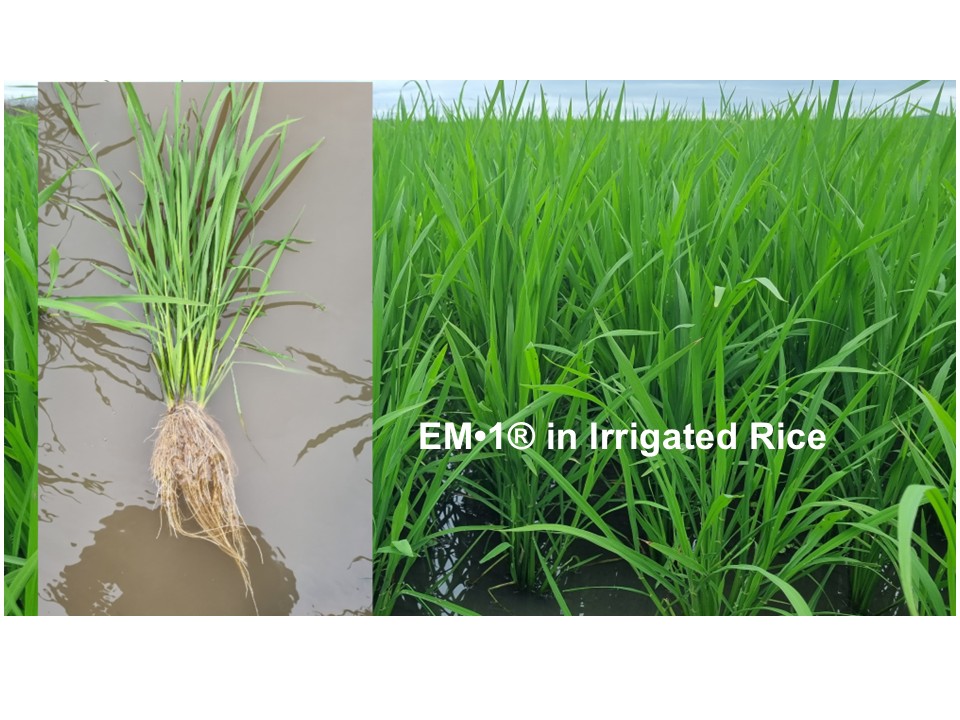
EM・1® was used for irrigation in rice cultivation
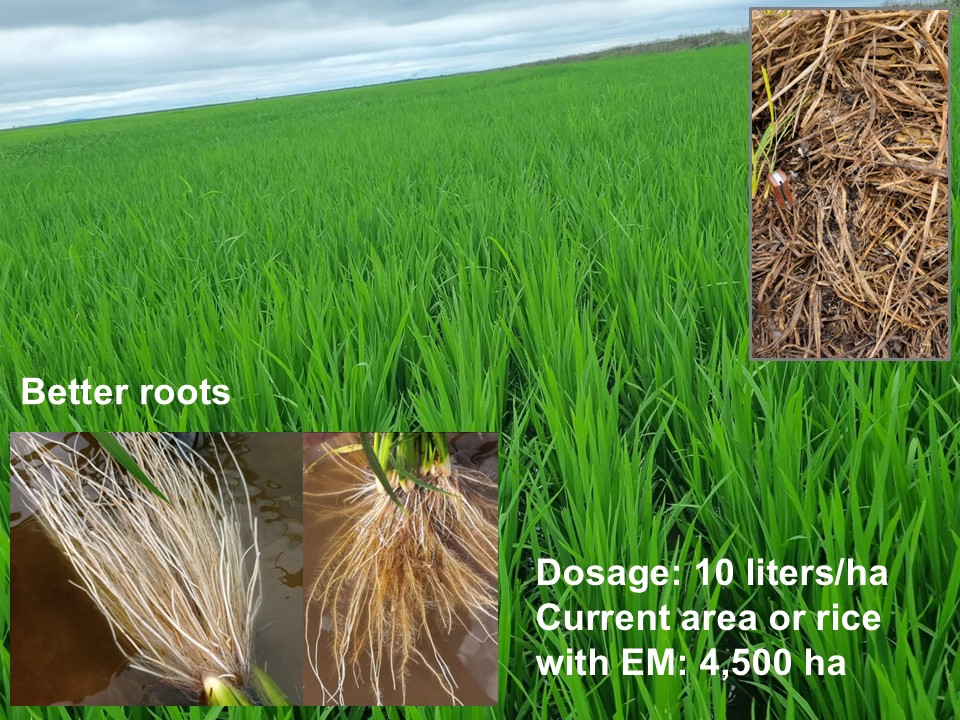
Healthier roots
Amount used: 10L/ha
Area of EM application: 4,500 ha
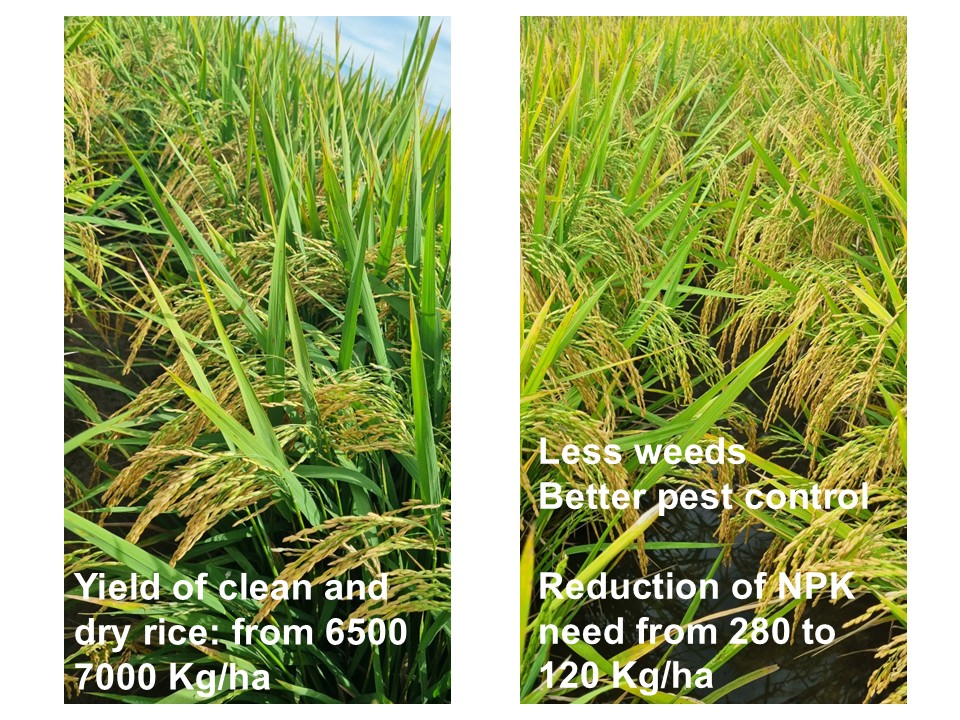
Left: Good rice yield. Increased from 6,500kg/ha to 7,000kg/ha
Right:
-Fewer weeds.
-Excellent pest control
-MPK requirement reduced from 280kg/ha to 120kg/ha
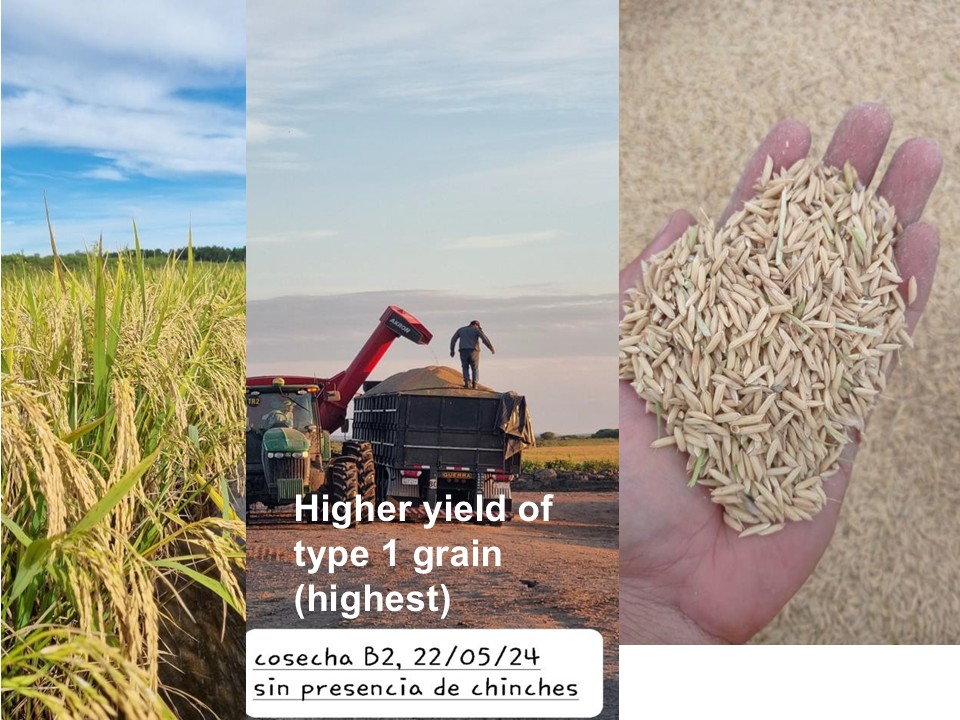
Highest ever yields of Type 1 grains
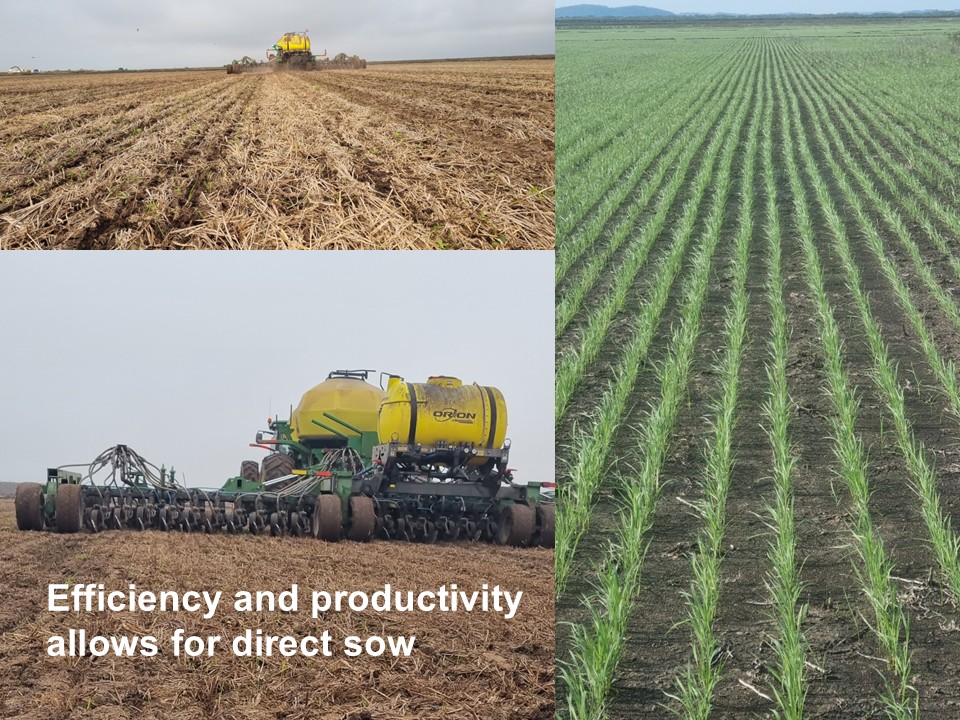
Efficiency and productivity allow for direct seeding
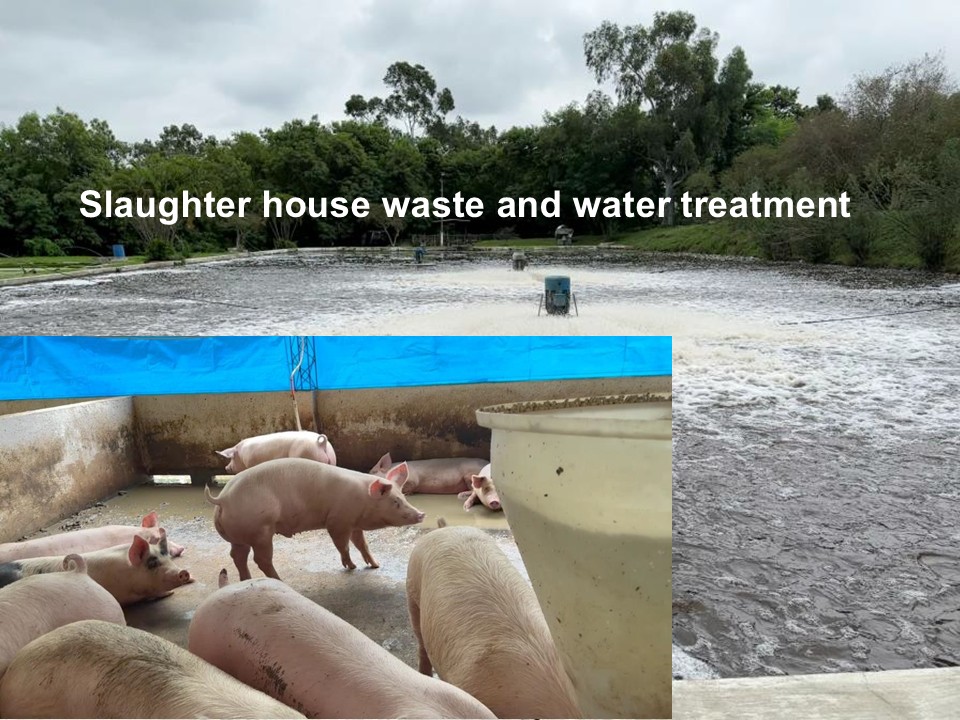
Slaughterhouse waste and water treatment
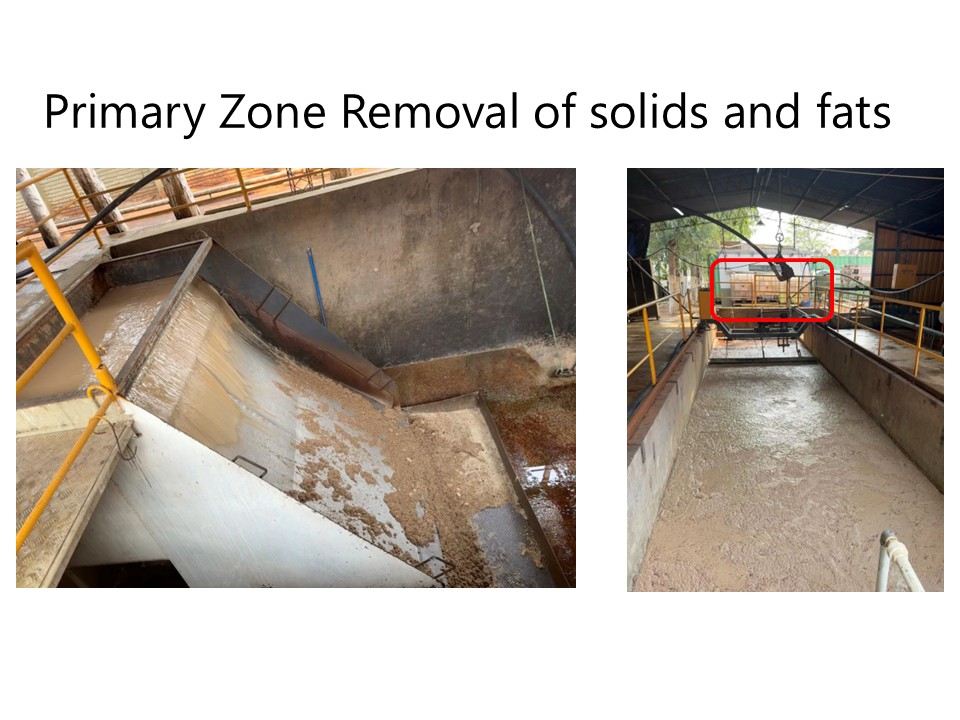
Primary treatment: solids and fat removal
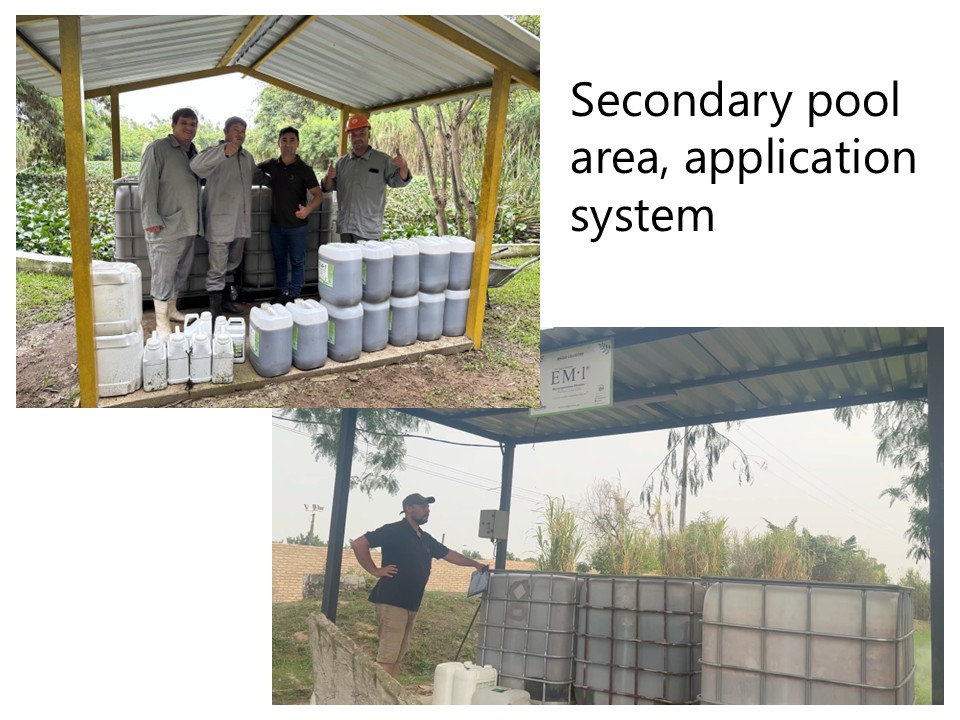
Secondary treatment tank area, treatment facility
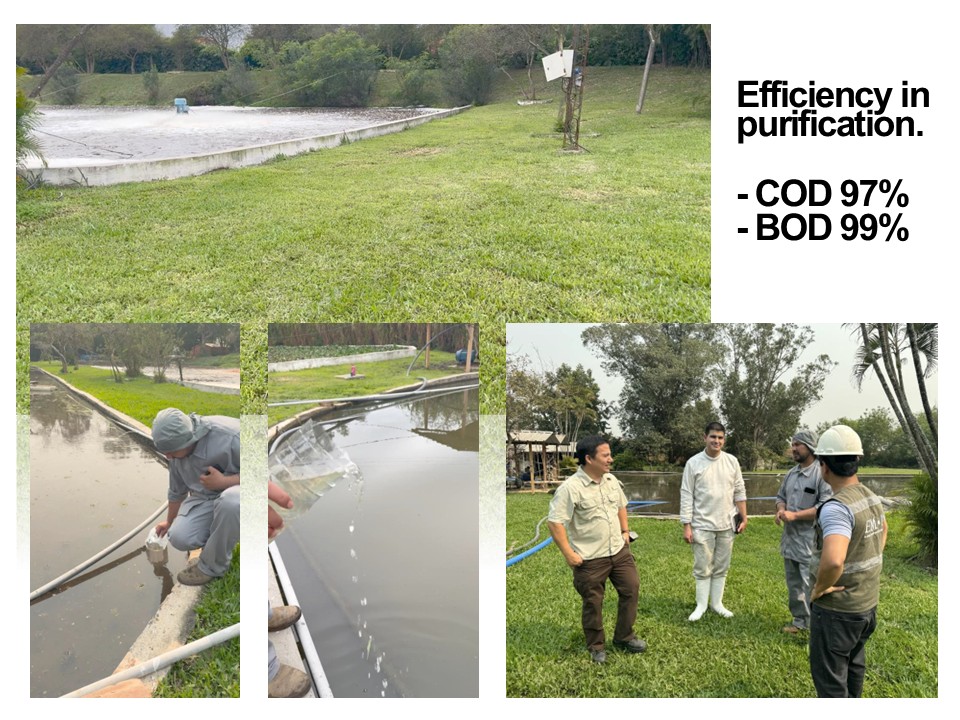
Purification efficiency -COD 97% -BOD 99%
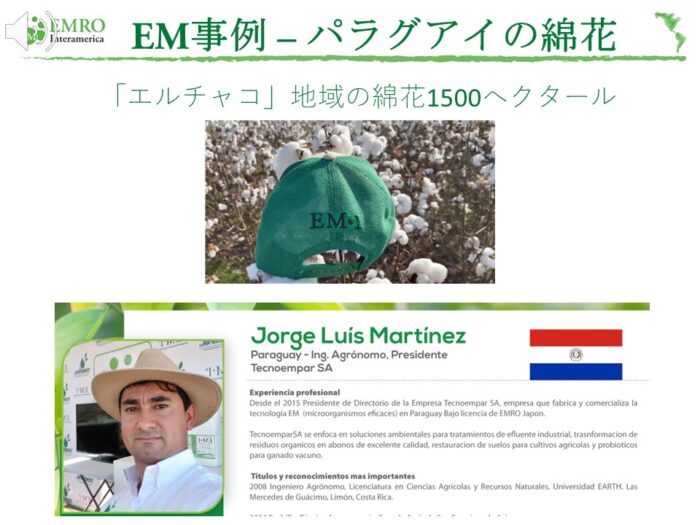
EM Case Study: Cotton cultivation in Paraguay
1500 hectares of cotton in the El Chaco region
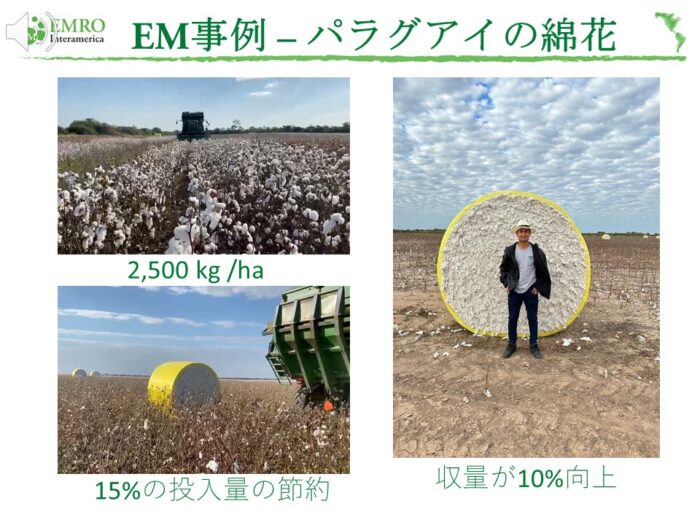
EM Case Study: Cotton cultivation in Paraguay
2,500 hectares 15% input savings 10% yield increase
The photos and reports are courtesy of EMPAR.
Read the original Japanese message at the link below.
2025.6.1 Updated.

EM Research Organization, Inc.|
All Rights Reserved. 2025 © EM Research Organization