
Photo 1 Application of salt charcoal bokashi
In the previous article I introduced how, in the process of making rectified charcoal, pruned branches, sawdust, rice straw, rice husks, and fallen leaves, etc. are also burned to make rectified ash, and also how to make salt charcoal bokashi adding equal or half amount of salt to the above charcoal and ash, then stirring them very well.
The effect of salt charcoal bokashi is remarkable; as shown in Photo 1, it is more effective than chemical fertilizers. At the same time, the soil becomes fluffy and aerated, weeds are extremely reduced, and the number of pests also greatly decreases. However, since all crops will also be damaged when the amount of salt increases, the key is to always put a small amount of it in a few places.

This organic charcoal is advantageous in that it is possible to extinguish the charcoal and adjust the moisture of EM fermented food waste at the same time, since the EM fermented food waste compost, which is moist, is mixed into the burned charcoal.
(If you don’t have such a bag, put it in a regular paper bag and store it in a well-ventilated place. If the bag remains as it is, the remaining organic matter might attract rats, so I recommend storing the bag in a larger plastic container, etc. You can also store it in an EM food waste recycling bucket.)
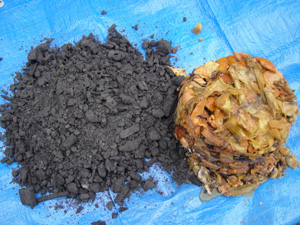
Photo 2 Rectified charcoal and EM fermented food waste compost
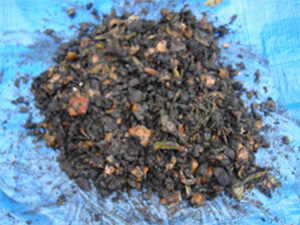
Photo 3 Organic charcoal after fermentation
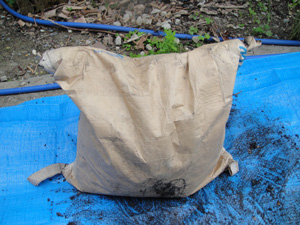
Photo 4 A bag mixed with rectified charcoal and EM fermented food waste compost
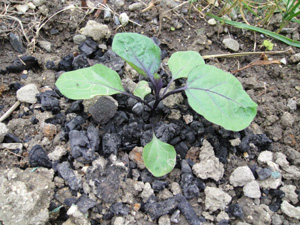
Photo 5 Eggplant with organic charcoal applied
After one week, spread the finished organic charcoal a little widely (1- 2 cm) at the bottom of the planting hole, lightly put soil on it (1- 2 cm), plant the eggplant seedlings, and then layer 1- 2 cm of organic charcoal as mulch around the root. (Photo 5)
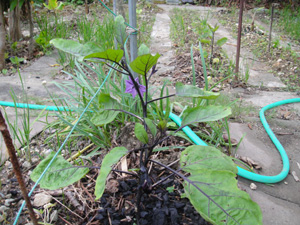
Photo 6 Eggplant one month after application of organic charcoal
In Photo 6, the first fruit cluster is growing well one month later. If you apply 10 to 15g of salt containing rectified ashes at four places, 30 cm apart, once a month, you can keep harvesting eggplants for a long time. This test field dug up only the surface of a gravel-filled parking lot, and no decent fruits and vegetables have grown. I planted ten eggplants in the same way, and all are growing well.
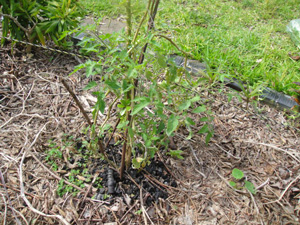
Photo 7 A sprout of a tomato with organic charcoal on the root
Photo 7 is a Hikobae (sprout)* of a tomato, grown in the same way.
The previous stock was also quite fruitful, but it has become possible to carry out stocking without root rot by utilization of organic charcoal. In places where there were no sprouts, you can simply plant cucumbers, Miyako red beans, okra etc. and apply the organic charcoal once a month to achieve the expected results. As this method only involves laying it on the root, it is an easy farming method.
* “Hikobae” means sprouts from the stump and buds from the base of a tree. (Digital Daijisen)
Read the original Japanese message at the link below.
2019.5.15 Updated.

EM Research Organization, Inc.|
All Rights Reserved. 2025 © EM Research Organization